Factories That Talk Back — The Evolution of Manufacturing Intelligence
Abhay Pareek
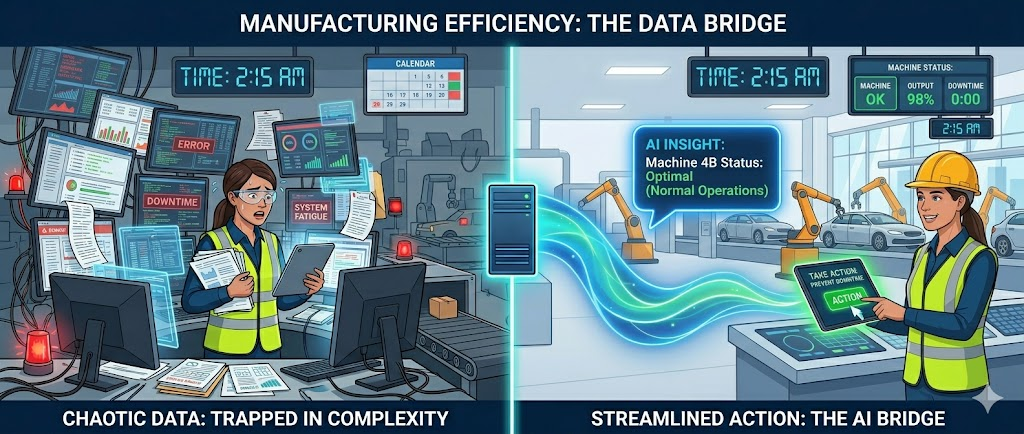
It's 2:15 AM.
A production line suddenly stops.
Operators stare at the machine. Maintenance teams rush in. Supervisors start asking questions.
"What happened?"
"Why did it stop?"
"How long will this take?"
The strange part?
The answers already exist.
Somewhere inside dashboards, alarm logs, sensor reports and maintenance systems.
But finding the real issue still takes time — and in manufacturing, every minute of downtime burns money.
For years, factories focused on one big challenge: collecting data.
First came paper registers and whiteboards.
Then Excel spreadsheets.
Then connected dashboards, OEE systems, and predictive maintenance platforms.
Machines began generating massive streams of real-time operational data. Factories became more visible than ever before.
But a new problem quietly appeared:
We collected the data.
Now humans had to interpret it.
And that's where the delays begin.
The Dashboard Problem
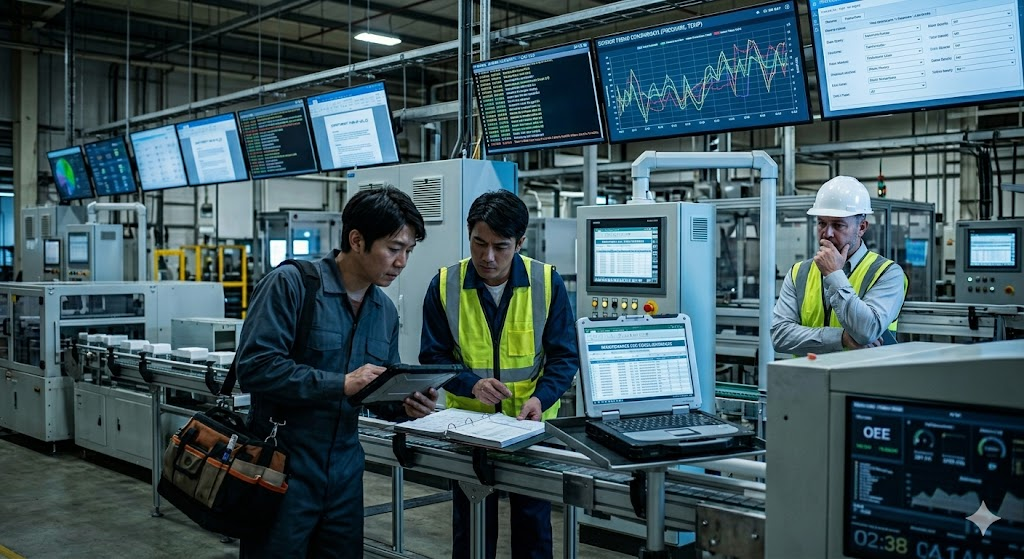
Imagine a critical machine suddenly goes down.
To investigate, engineers often need to:
- Open multiple dashboards
- Check alarm histories
- Compare sensor trends
- Export reports
- Cross-reference maintenance logs
The information exists — but it's scattered across systems.
Meanwhile, production is waiting.
Dashboards helped factories see operations.
But they still require humans to hunt for answers.
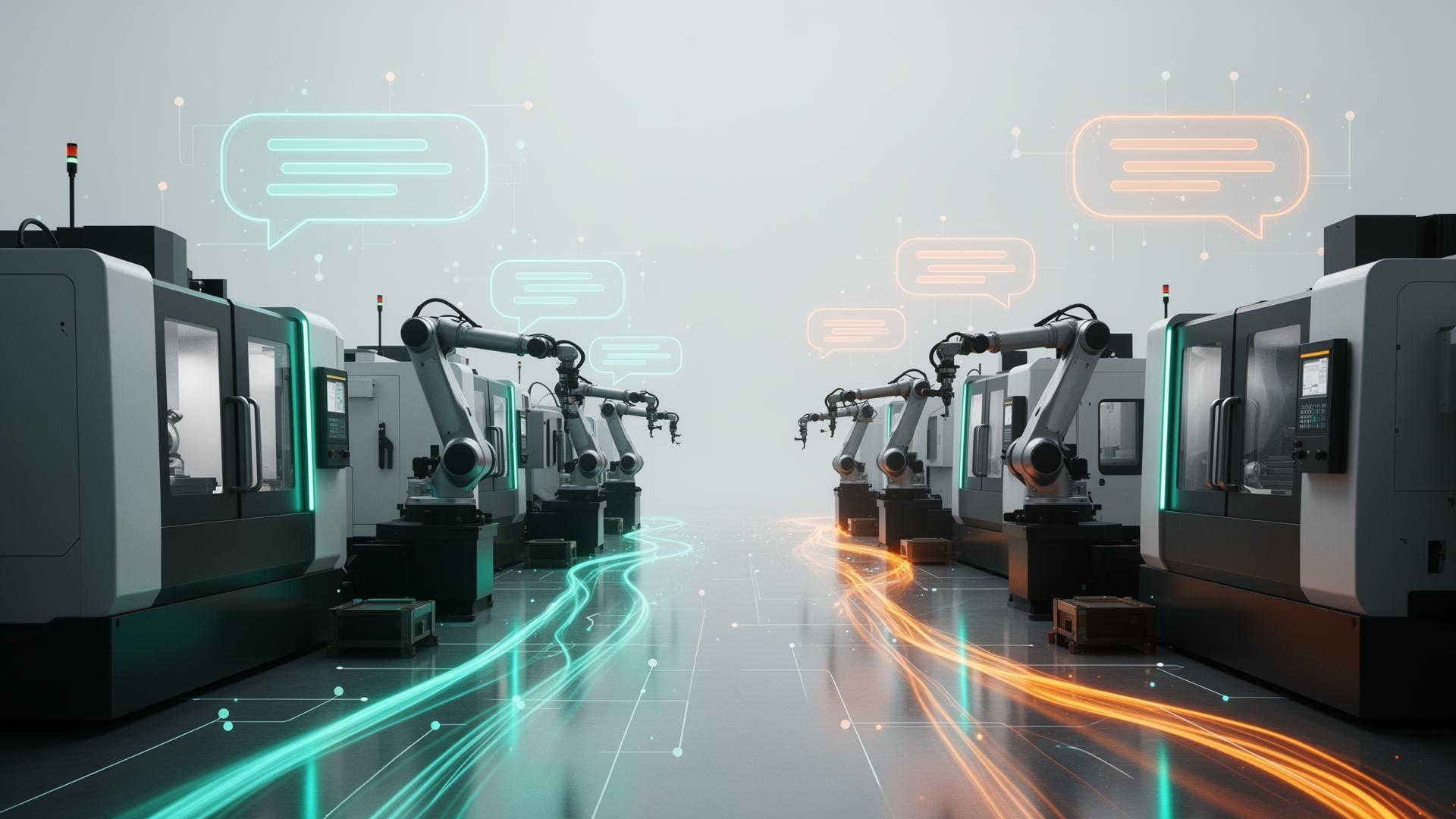
The Next Shift: Factories That Talk Back
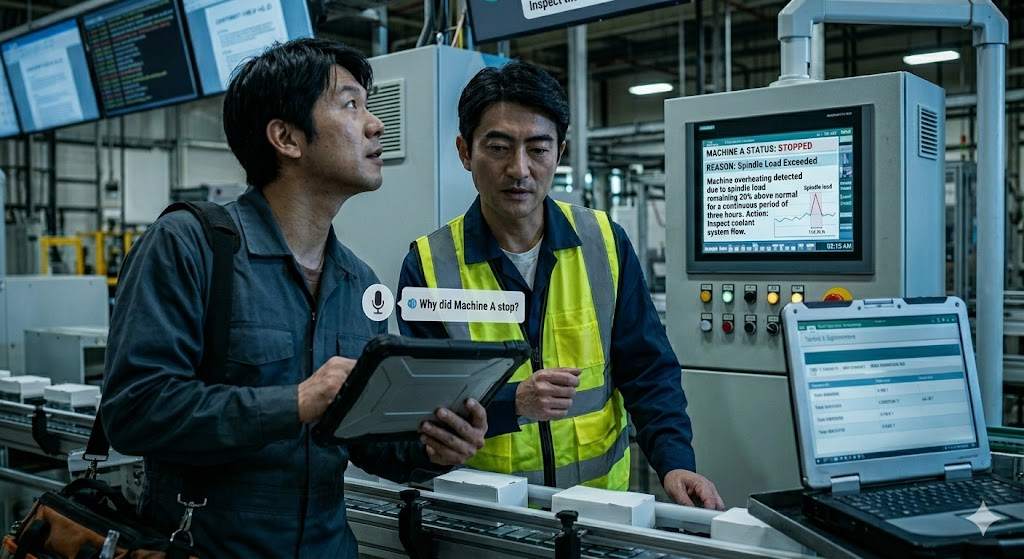
Now imagine something different.
An operator simply asks:
"Why did Machine A stop?"
And the factory responds:
"Machine A overheated because spindle load stayed 20% above normal for three hours. Please inspect the coolant flow."
No searching.
No chart decoding.
No waiting for specialists to interpret graphs.
Just a conversation.
That's where manufacturing intelligence is heading.
From Dashboards to Conversations
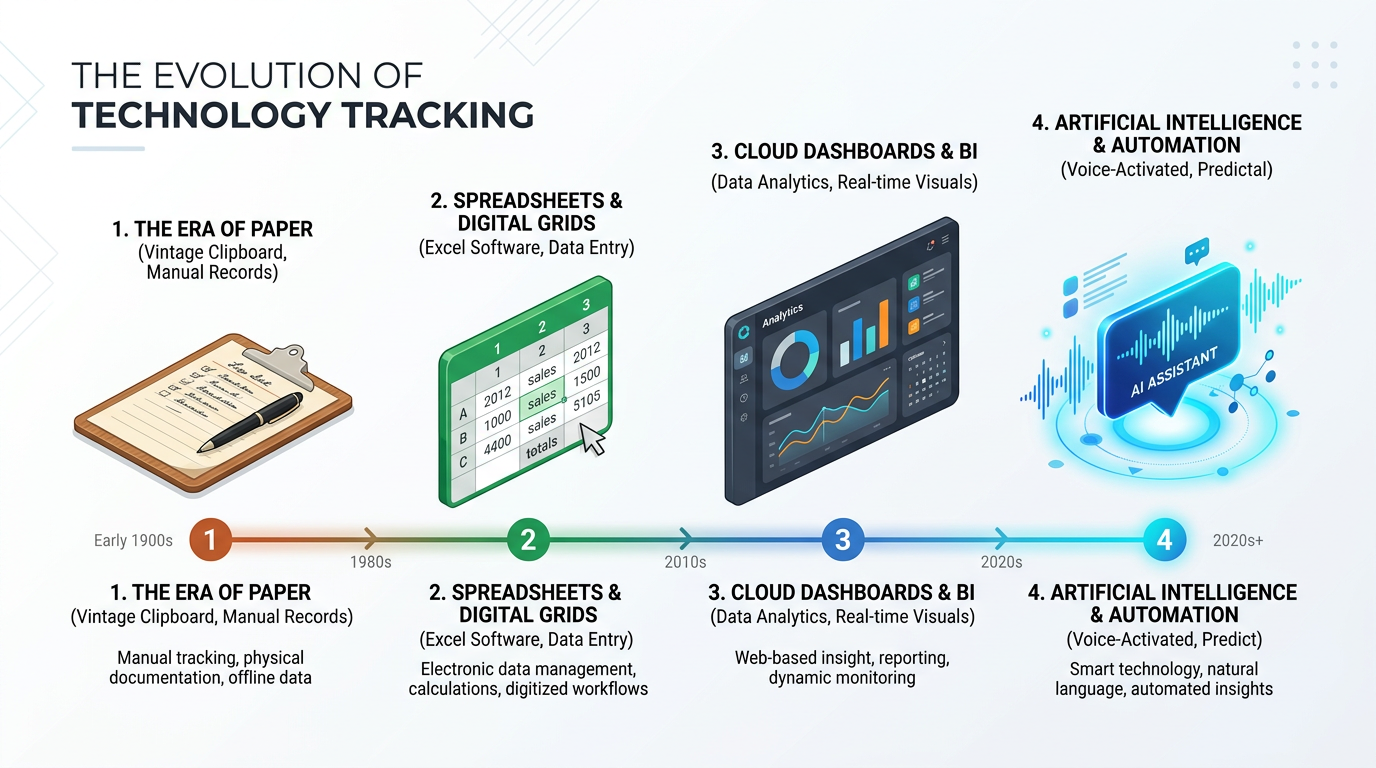
Factories have evolved through clear stages:
Paper → Excel → Dashboards → Conversations
Each step reduced the delay between data and decision.
Traditional systems answer questions like:
- What happened?
- When did it happen?
- How often did it happen?
Dashboards improved visibility, but they still required humans to search across systems, interpret charts, and connect the dots manually.
Now the next shift is emerging.
Conversational AI goes one step further:
- Why did it happen?
- What should we check next?
- What pattern caused this issue?
Instead of navigating dashboards, operators can interact with factory systems more naturally — almost like talking to an experienced engineer.
The factory is no longer just generating data.
It's beginning to explain itself.
What Makes This Possible?
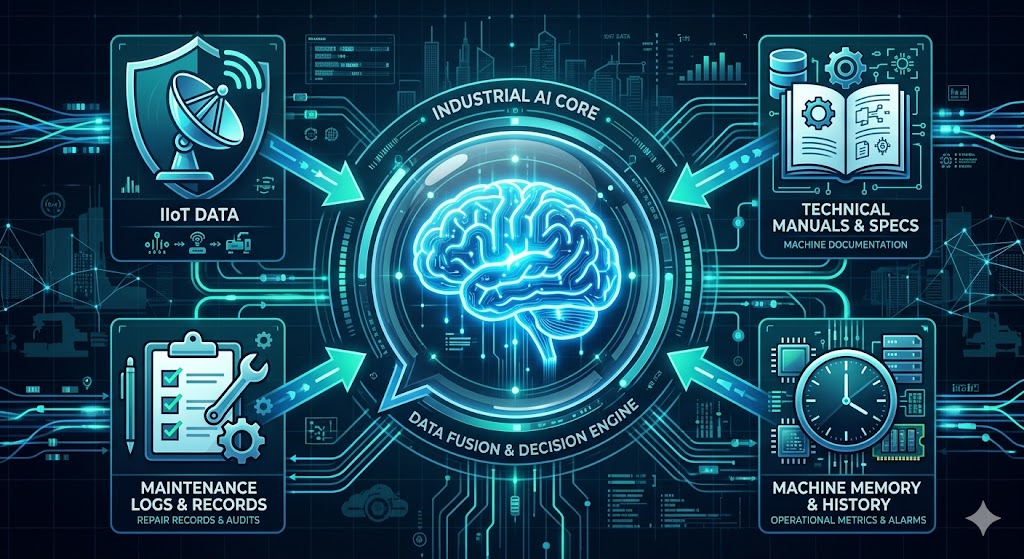
Behind this shift is a convergence of technologies that manufacturing systems previously lacked.
- Real-Time IIoT Data → Live machine signals and sensor streams
- Historical Machine Behavior → Years of operational patterns
- Industrial Knowledge Bases → Manuals, SOPs, maintenance history
- AI Reasoning → Systems that connect the dots and explain problems naturally
The Real Goal Isn't Replacing Humans
Factories don't need AI making blind decisions.
They need AI that helps humans react faster.
The best industrial AI systems will:
- Reduce investigation time
- Surface hidden patterns
- Simplify complex machine behavior
- Help teams make faster decisions
Human expertise still matters.
AI simply removes the friction between data and action.
In many factories, even reducing root-cause investigation time by a few minutes can save thousands in lost production.
The Reality Check
This vision only works if a few hard problems are solved.
- Data Quality — Factory data is often noisy and inconsistent. Bad data leads to unreliable AI insights.
- Human Trust — Operators trust systems that are consistently accurate — not systems that simply sound intelligent.
- Integration Complexity — Factories run on layered systems like MES, SCADA, ERP, and maintenance platforms that are often disconnected.
- Safe AI Usage — In manufacturing, wrong suggestions are expensive. AI should assist human decisions, not replace them.
Final Thought
The factory of the future won't just produce data silently in the background.
It will explain itself in real time.
Not to replace human expertise — but to amplify it.
And when that happens, the biggest change won't be in machines.
It will be in how quickly humans and factories can finally understand each other.