
Intelligent Field Engineering: The Shift From Paper to Productivity
Anvitha Bekal
Paper Is Still Running Most Field Inspections
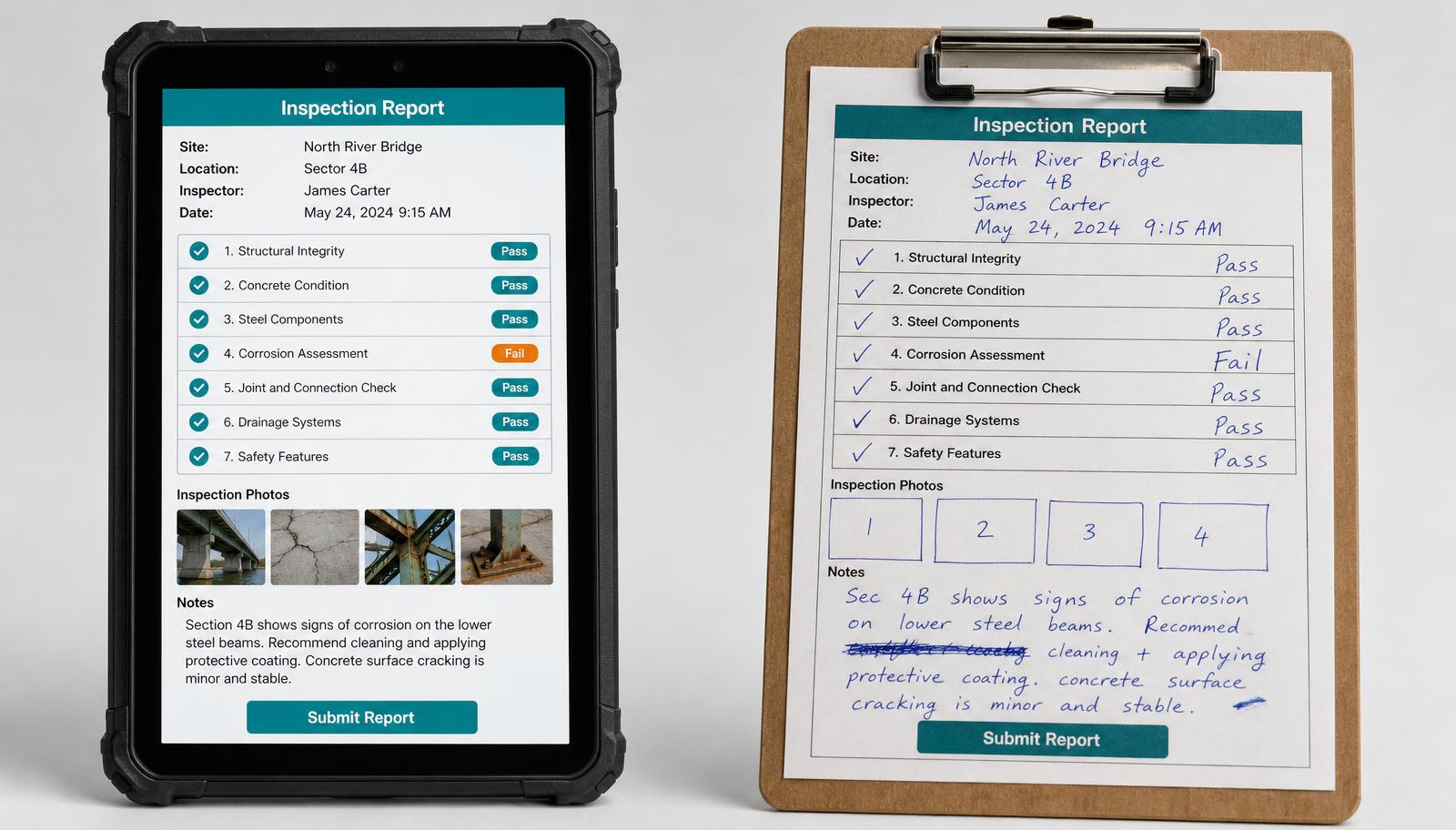
Walk onto almost any job site today and you’ll see the same thing: an inspector with a clipboard, checking tanks, welds, systems, batches — writing everything down by hand.
By the time they get back to the truck, they’ve filled multiple pages.
Someone at the office is expecting a report tomorrow.
But “tomorrow” really means whenever someone finally gets time to sit down and retype everything. The inspection itself takes an hour. Turning it into something usable takes the rest of the day.
Nobody talks about that part.
The Real Problem Isn’t the Inspection
A field inspection is actually two jobs disguised as one.
Job 1: Observe and record — on paper, on site, in real time.
Job 2: Turn that paper into something a client or regulator will accept — typed, formatted, organized.
Both steps use the same information. It just gets written down twice:
- Once quickly in the field
- Once again later, by someone trying to decipher their own handwriting
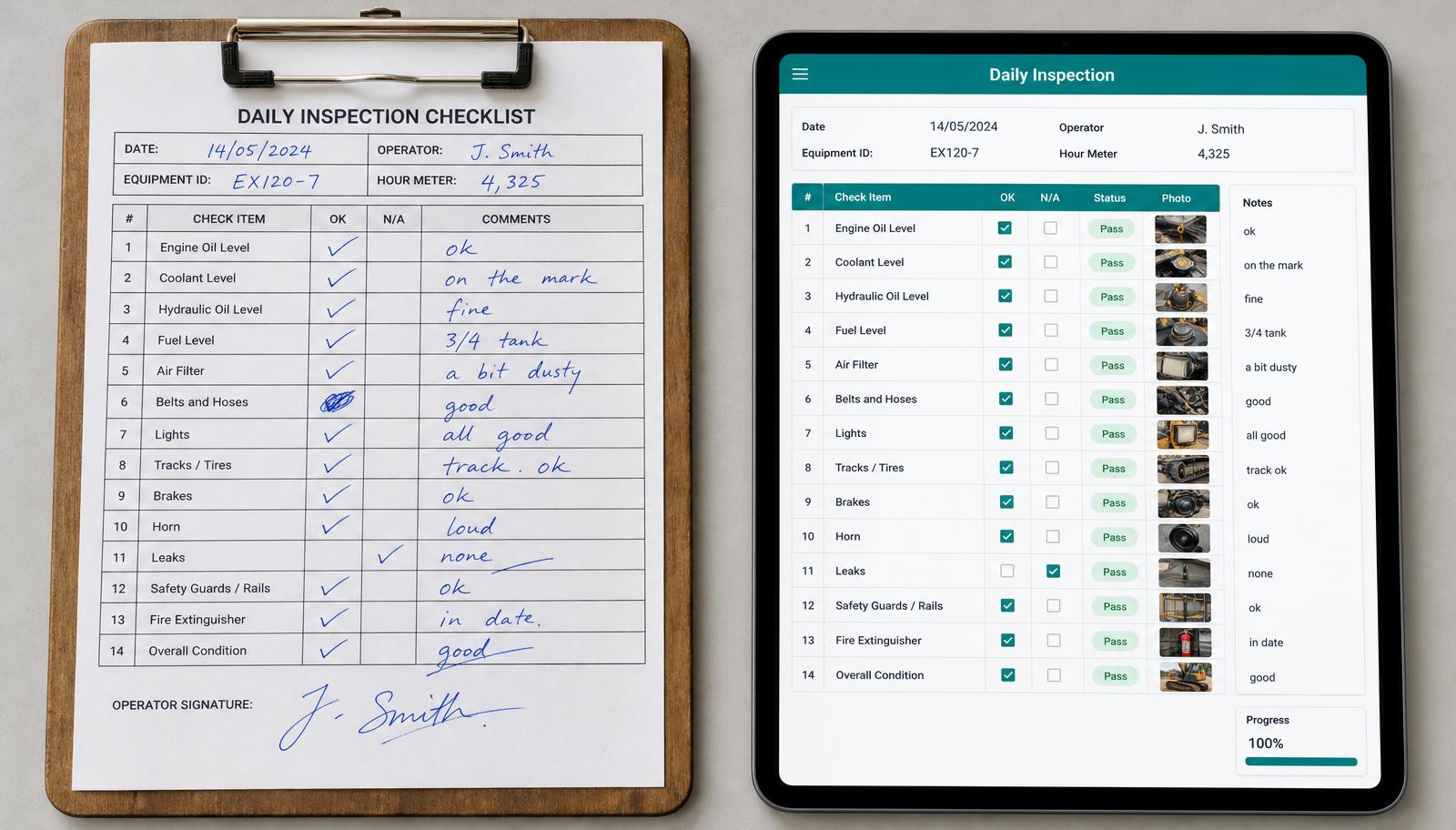
This isn’t a training issue. Inspectors know exactly what they’re doing. It’s a workflow built around paper, quietly running in a world that expects a polished PDF the same day.
What Changes When You Remove the Second Step
You don’t need to reinvent inspections. Inspectors already know what to check. What’s missing is a way to capture that information once — without retyping it later. So you move the checklist from paper to a phone.
- Fill it out on site
- Let it work offline (because most job sites don’t have signal)
- Sync automatically when a connection appears
- Generate the report instantly once someone reviews the data
“Is the report ready?” “It already is.”
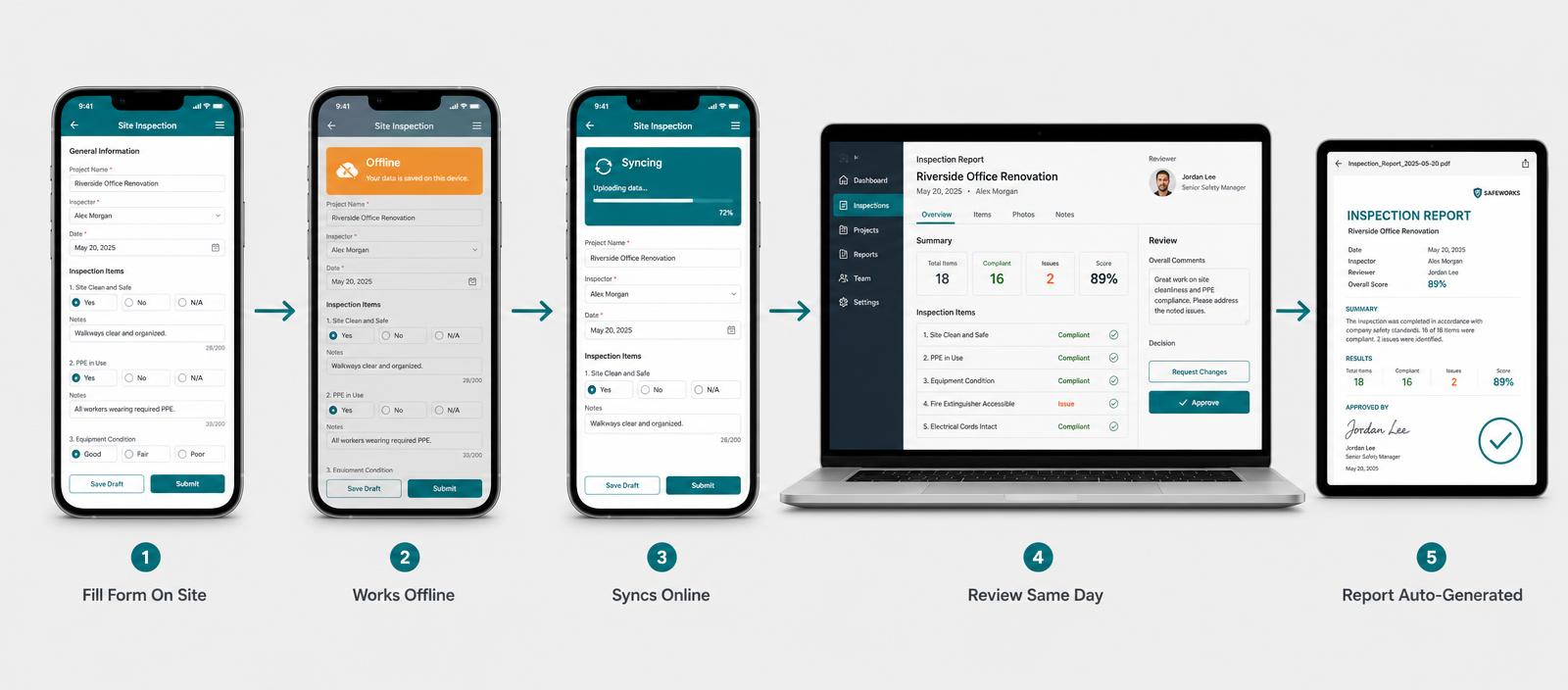
No handwriting to decode. No loose photos to match with notes from memory. Every part of the process happens exactly once.
The Part That’s Easy to Get Wrong
Putting a form on a phone doesn’t fix anything by itself.
If the digital version isn’t built carefully, it just moves the same problem somewhere else.
The essentials:
- Offline support must be real, not occasional
- Sync must be automatic, not something people have to remember
- The checklist must match regulatory expectations — digitizing a bad form only produces a bad form faster
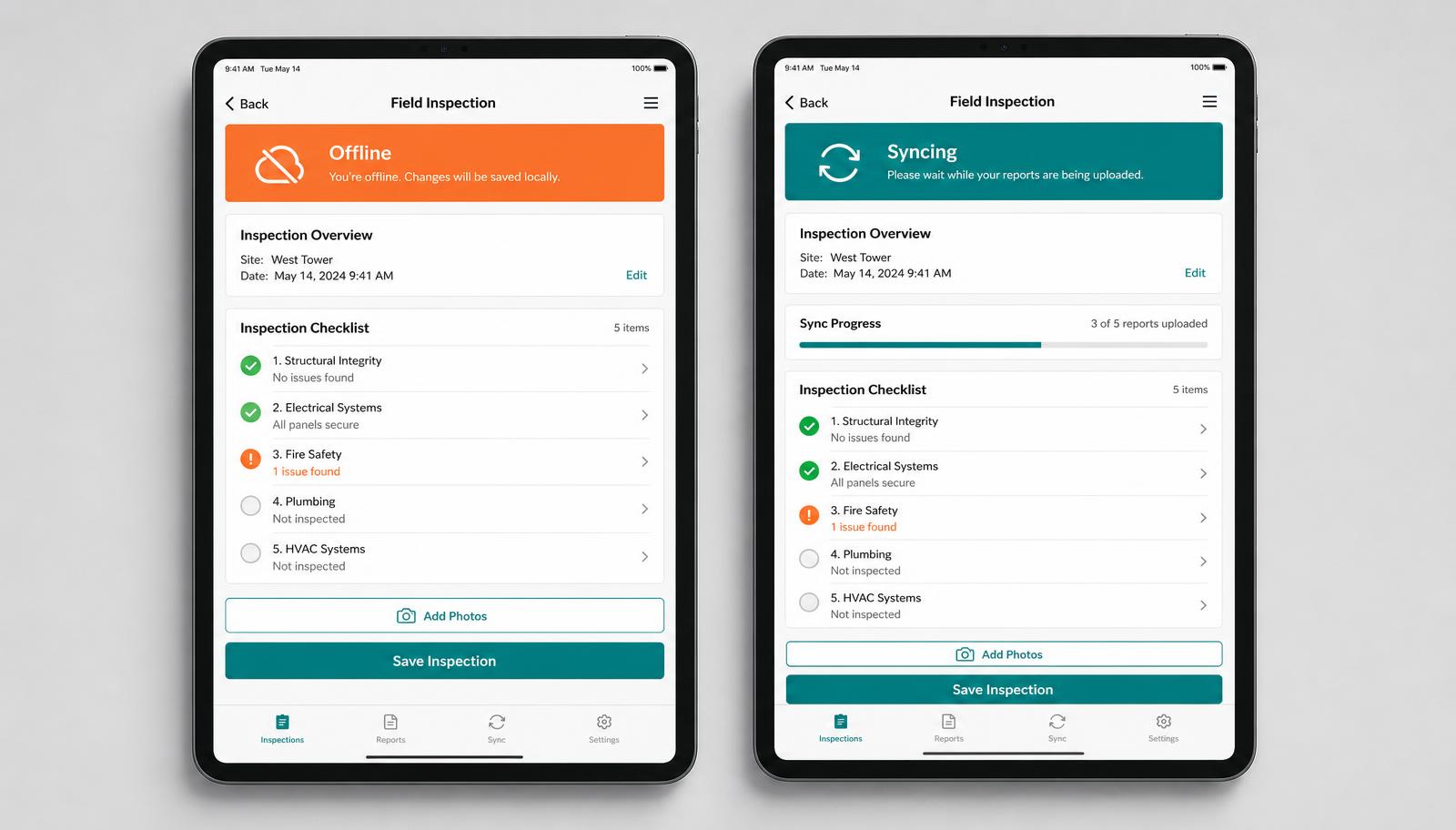
None of this is complicated. It’s just easy to skip when the goal is a good demo instead of something a 15-person inspection team can rely on every day.
Looking Back
Digitizing inspections doesn’t change the work itself.
The tank still needs checking. The weld still needs a trained eye. The expertise stays exactly where it is.
What disappears is the second job hiding behind the first — the hours spent turning handwriting into a document after the real work is done.
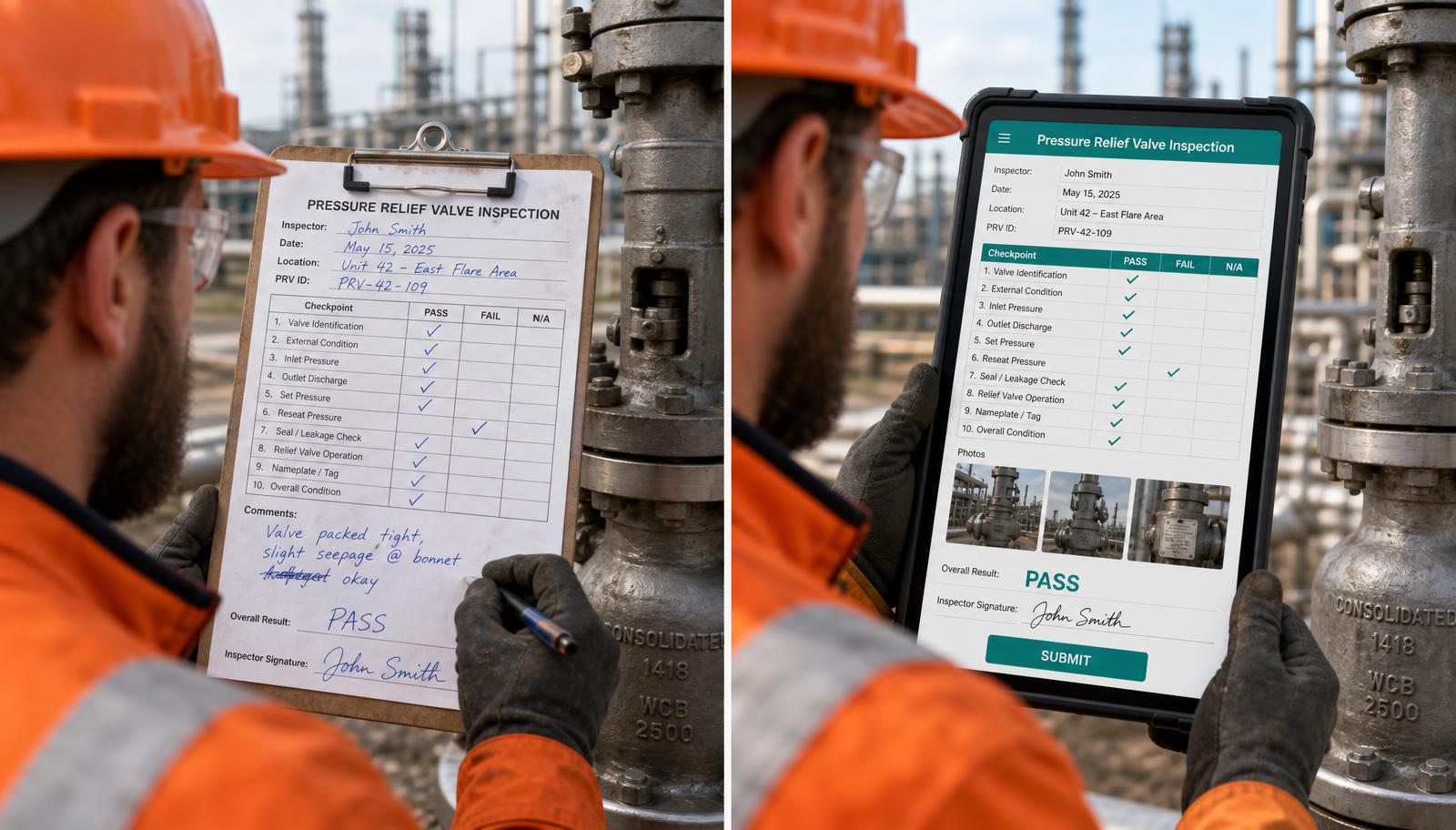
For much of the industry, that part is still stuck on paper. It’s a fixable problem. And fixing it doesn’t touch the skill the job actually requires.