Simplifying In-App Purchases with RevenueCat
Sourav Nambiar
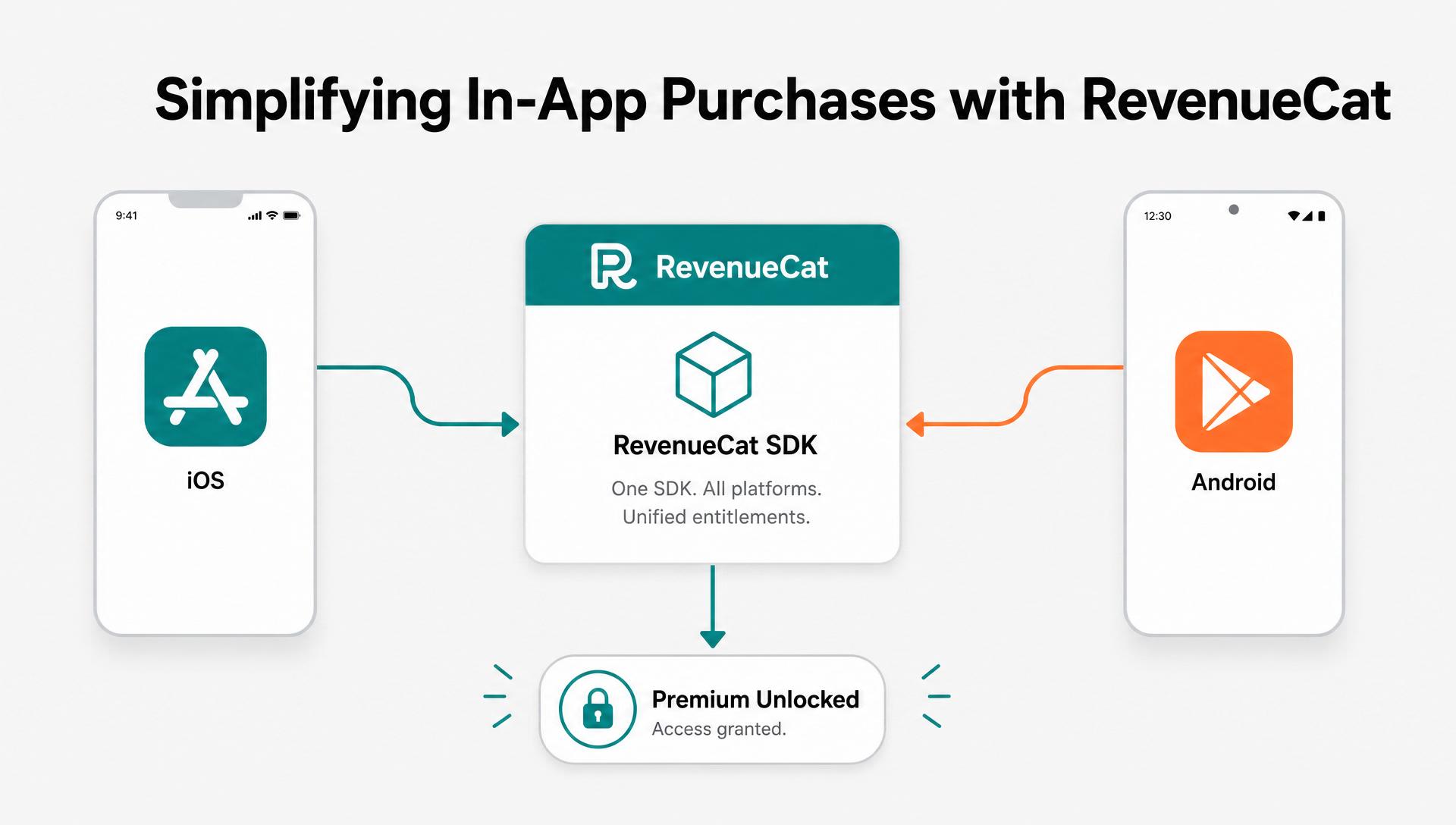
RevenueCat: the bridge between platforms, connecting iOS (StoreKit) and Android (Play Billing) through one SDK.
Every feature starts the same way.
Someone creates a Jira ticket.
Someone else estimates it.
Everyone nods confidently.
Then someone casually says, "It should work on both iOS and Android."
Congratulations. Your one feature has quietly become two.
That was exactly how our subscription journey started.
On the surface, it sounded simple. Users should be able to purchase a subscription, unlock premium features, restore purchases on a new device, and have everything stay in sync.
Simple.
Until we looked under the hood.
The "Same Feature, Different Universe" Problem
Apple and Google both support subscriptions. Unfortunately, that's where the agreement ends.
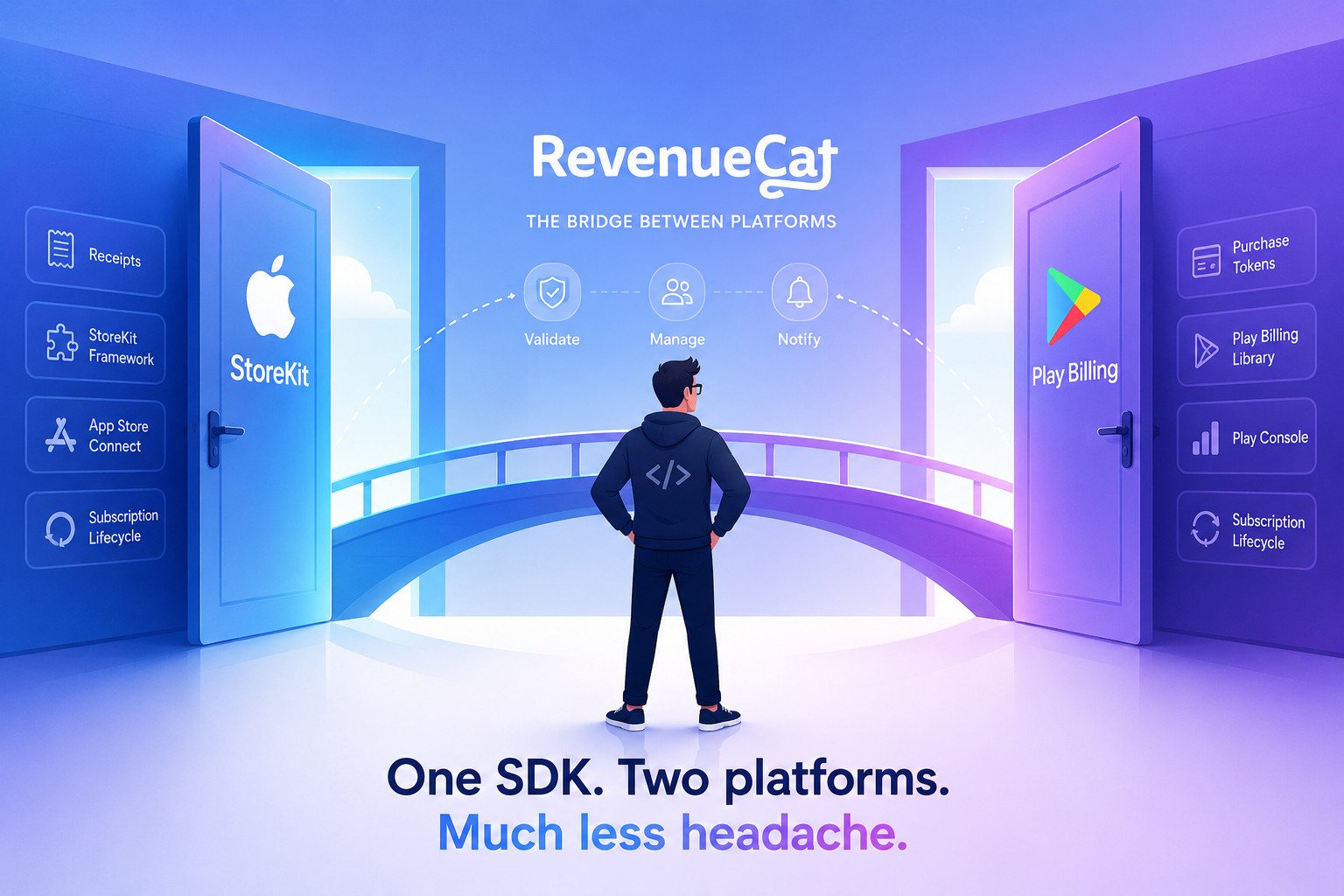
Apple introduces StoreKit. Google introduces Play Billing.
Apple gives you receipts. Google gives you purchase tokens.
Apple has App Store Connect. Google has Play Console.
Both are technically solving the same problem, yet somehow manage to make you feel like you're implementing two completely different products.
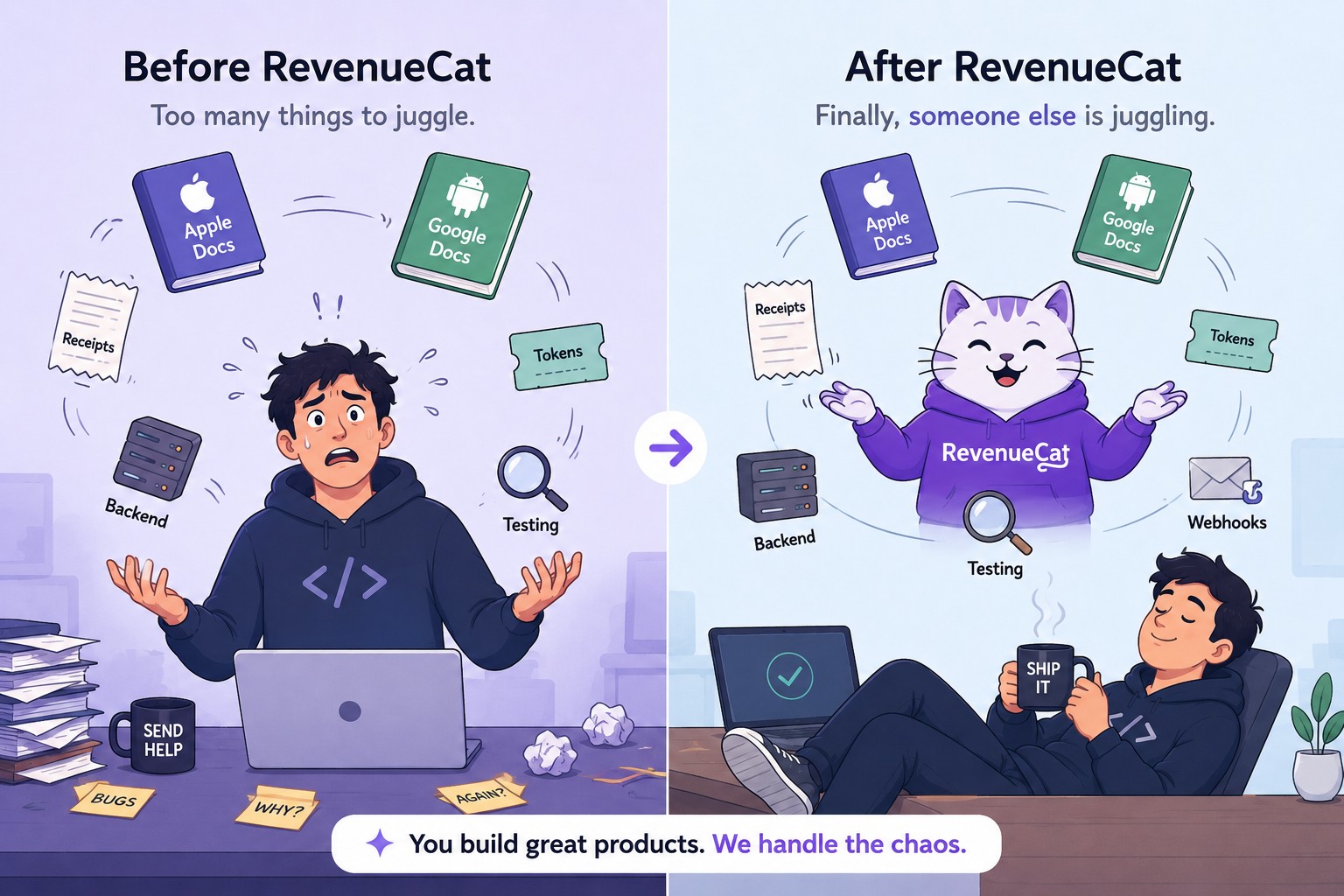
Very quickly we realized something. We weren't building one subscription feature. We were maintaining two billing systems that happened to sell the same thing.
Every bug needed two investigations. Every new feature required two implementations. Every test needed to be performed twice.
It wasn't difficult because the APIs were bad. It was difficult because they were different.
Enter RevenueCat
At this point we weren't looking for another payment provider. Apple and Google already handle payments perfectly well.
We wanted something that could hide the platform differences without hiding the important details.
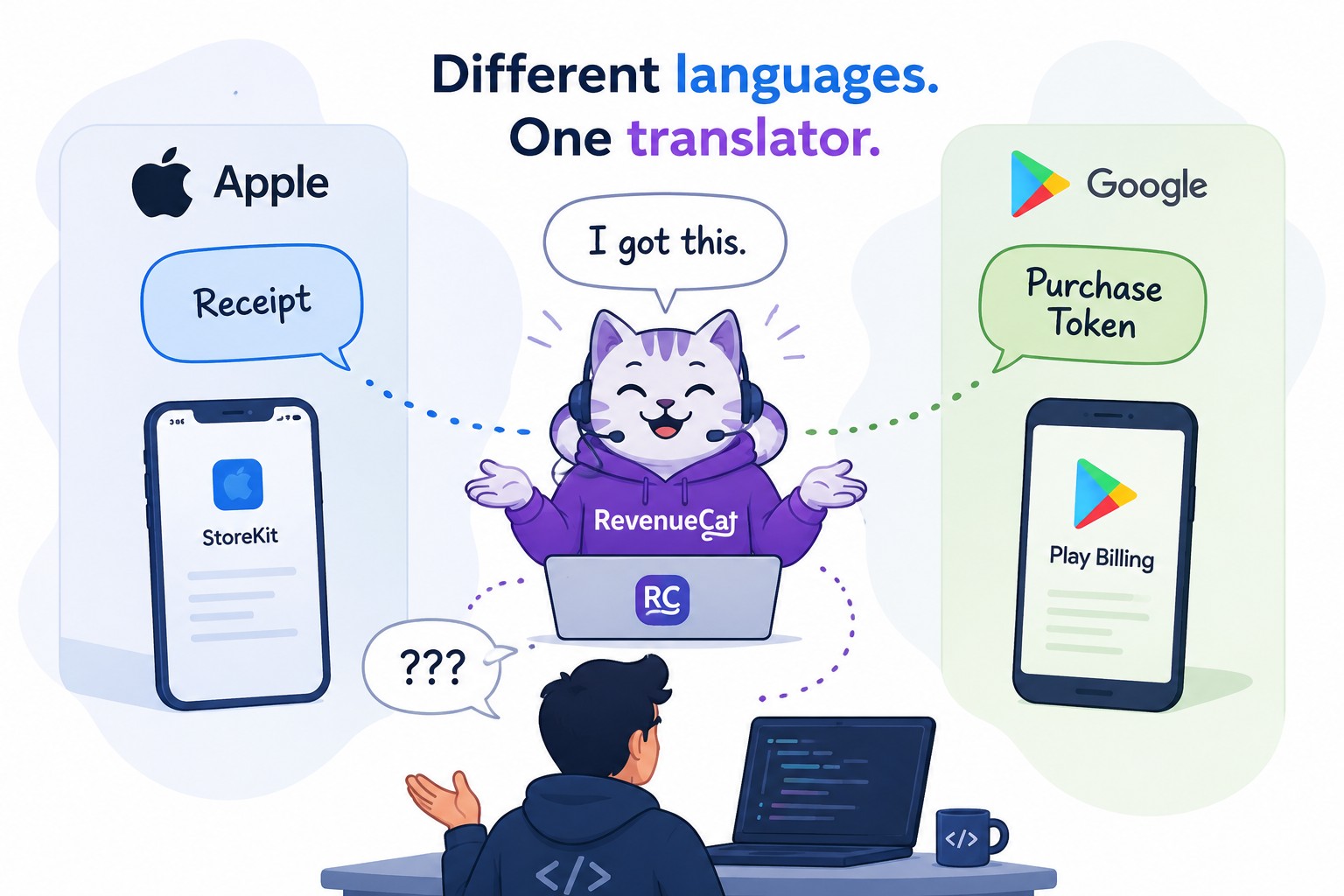
RevenueCat became that layer.
Think of it as that one colleague who somehow speaks fluent backend, frontend, DevOps, and product. You don't know exactly how. You're just glad they're on your team.
Instead of asking, "How do I validate this Apple receipt?" or "What do I do with this Google purchase token?" our application started asking a much simpler question.
"Does this user have Premium?"
That was it. RevenueCat handled everything else.
Suddenly, Our Architecture Made Sense
One of my favourite moments in software projects is when a messy architecture suddenly becomes... boring.
Boring architecture is underrated.
Our application talked to RevenueCat. RevenueCat talked to Apple and Google. RevenueCat notified our backend whenever subscriptions changed.
Everyone had exactly one responsibility. Nobody stepped on anyone else's toes.
Software engineers call this "good architecture." Future engineers call this "thank you."
Our React + Capacitor application remained blissfully unaware of whether the customer was holding an iPhone or an Android device.
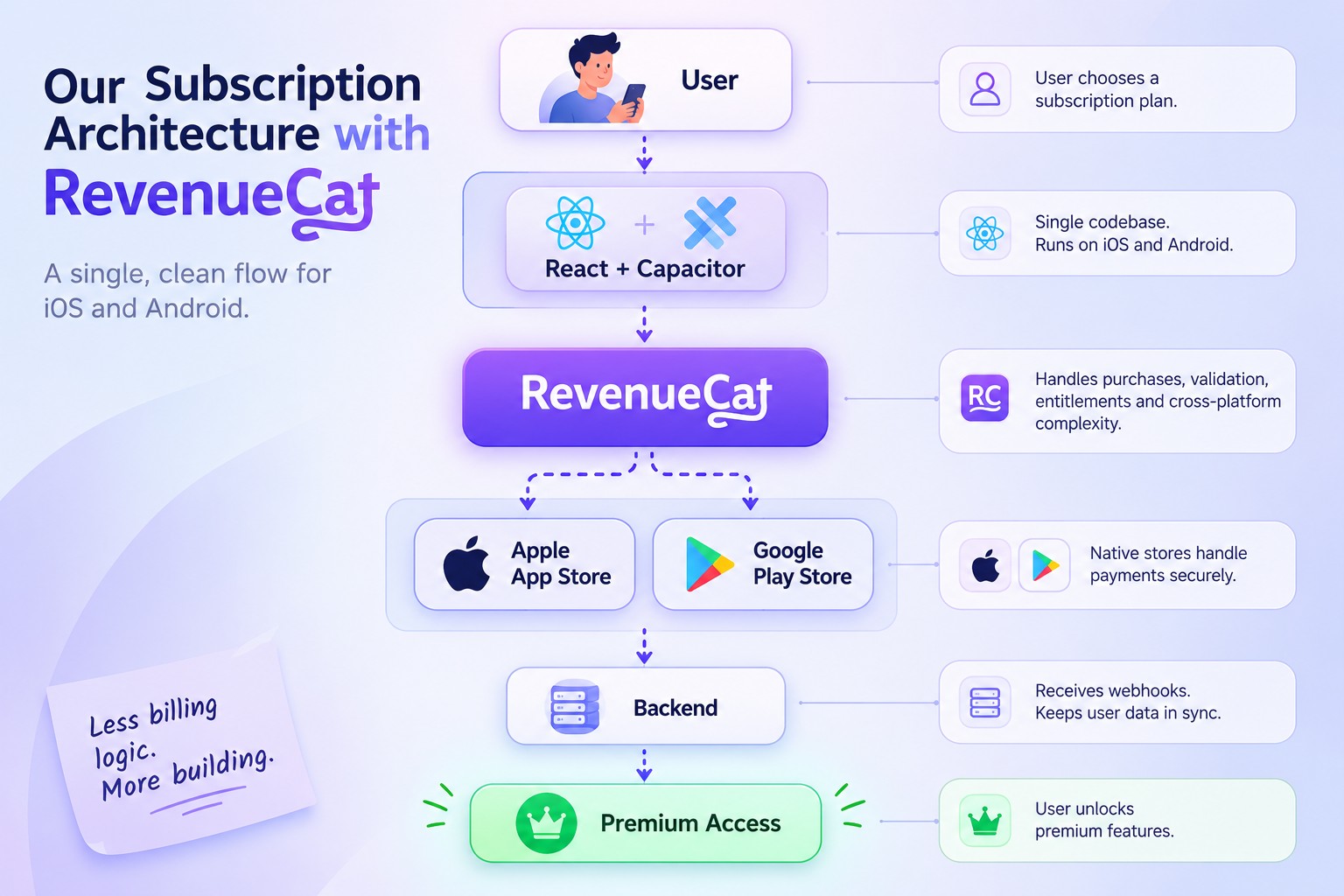
- User: chooses a subscription plan.
- React + Capacitor: single codebase, runs on iOS and Android.
- RevenueCat: handles purchases, validation, entitlements and cross-platform complexity.
- Apple App Store / Google Play Store: native stores handle payments securely.
- Backend: receives webhooks, keeps user data in sync.
- Premium Access: user unlocks premium features.
Less billing logic. More building.
The Part Nobody Warns You About
RevenueCat simplifies subscriptions. It does not simplify App Store Connect. Or Google Play Console.
Those two still expect their paperwork.
Products. Pricing. Identifiers. Configurations. Permissions. Some more identifiers. One incorrect Product ID later... nothing works.
Eventually everything is connected through Applications, Products, Entitlements and Offerings inside RevenueCat. Once that puzzle clicks into place, the rest becomes surprisingly straightforward.
The Surprisingly Easy Part
Normally this is where a blog says, "Then we integrated the SDK." ...and quietly skips over three weeks of pain.
This wasn't one of those times. The SDK initialization was genuinely simple. Initialize. Identify the user. Fetch offerings. Purchase. Check entitlements. Restore purchases. Done.
The complicated part wasn't writing code. It was understanding the subscription ecosystem well enough to know what code needed to exist.
Behind One Tap
When a user taps Subscribe, it feels almost instant.
Behind that single tap:
- RevenueCat requests the offering.
- Apple or Google displays the payment sheet.
- The purchase completes.
- RevenueCat validates the receipt.
- Entitlements become active.
- A webhook notifies the backend.
- The database updates.
- Premium features unlock.
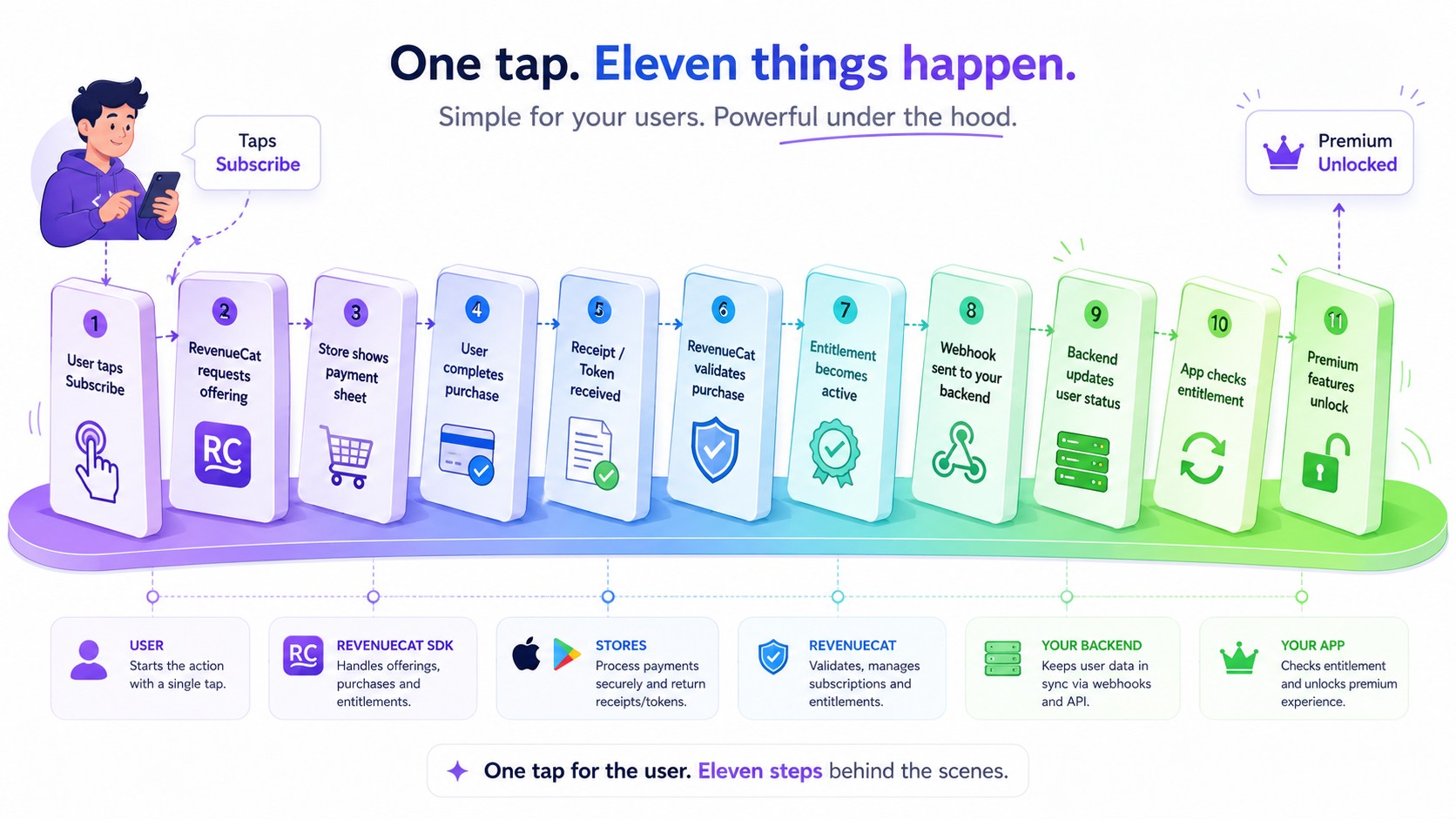
Eleven steps. One button.
Good software often looks simple because someone else did the hard work beforehand.
Ah Yes... Sandbox
Every engineer has that one environment.
For frontend developers it's Internet Explorer. For backend developers it's production. For mobile subscription developers... it's Sandbox.
Time behaves differently. Subscriptions renew every few minutes.
Sometimes you're debugging. Sometimes you're waiting. Sometimes you're debugging because you were waiting.
Eventually you stop asking, "Did I break something?" and start asking, "Is Sandbox just having a personality today?"
The answer is surprisingly often the second one.
Looking Back
RevenueCat didn't magically remove every problem. Apple is still Apple. Google is still Google. Store setup still exists. Sandbox still keeps you humble.
But instead of spending engineering time maintaining two billing systems, we spent it building features.
And that's probably the biggest compliment we can give any abstraction. When a tool quietly disappears into the background, it's usually doing its job remarkably well.